
![[Puberty Acne] Survival Guide: 8 Acne-Fighting Ingredients Every Teen Needs to Know](https://hormonehealthqueen.com/wp-content/uploads/2025/05/10x-Blogs-2025-05-18T171227.911-940x560.png.webp)

Let’s face it — puberty acne is a totally normal part of growing up. In fact, about 85% of teenagers deal with breakouts at some point. That means you’re definitely not alone if your face has decided to throw a few unexpected surprises your way.
While it might feel overwhelming, the good news is that acne during puberty is treatable. With the right routine and knowledge, you can reduce breakouts and feel more confident in your skin.
In this guide, we’ll break things down in a real, no-fluff way to help you understand your skin, choose the right products, and build a routine that actually works.
What Causes Acne During Puberty?
Blame it on hormones — specifically androgens, which increase during puberty in all genders. These hormones tell your oil glands to produce more sebum (oil), and that oil can clog your pores, leading to pimples.
Unlike adult acne, puberty acne is often:
- More active in the T-zone (forehead, nose, chin)
- Caused by sudden hormonal spikes, not chronic imbalances
- A mix of whiteheads, blackheads, and occasional red, swollen pimples
Types of Acne You Need to Know
- Are your pimples mostly whiteheads and blackheads with little redness? → Comedonal Acne
- Do you often get red, sore bumps that stick around? → Inflammatory Acne
- Do you have deep, painful pimples that don’t come to a head? → Cystic Acne
- Is your skin mostly oily all over your face? → Oil-Triggered Acne
- Does your acne flare around your period (for girls)? → Hormonal-Triggered Acne
📌 Note: You may have a combination! Knowing your type helps you choose the right treatments.
Your Simple Morning Routine (5 Steps)
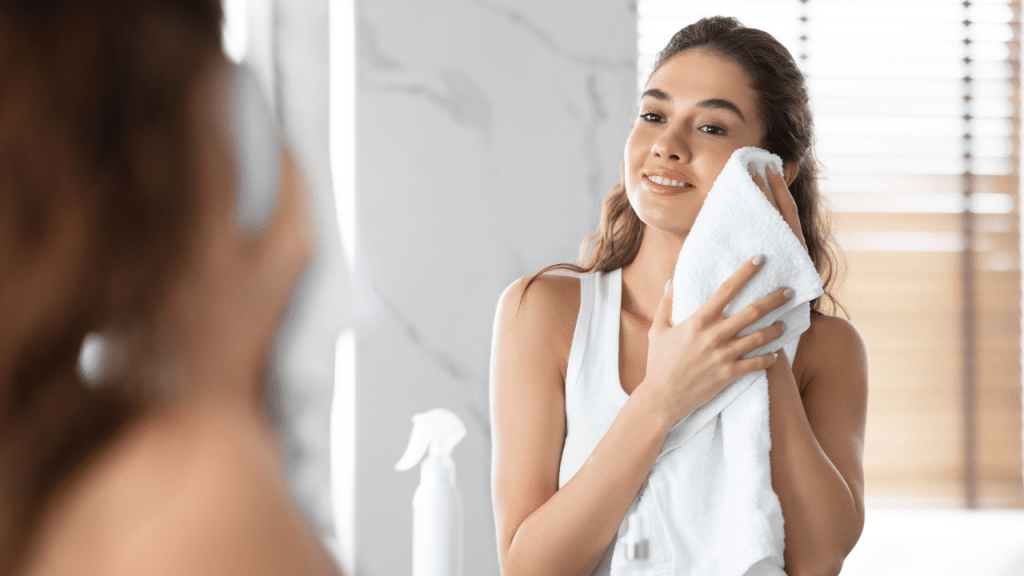
- Gentle Cleanser
- Try: CeraVe Foaming Cleanser (normal to oily skin)
- Budget: Neutrogena Oil-Free Acne Wash
- Alcohol-Free Toner(optional)
- Try: Thayers Witch Hazel with Aloe
- Non-Comedogenic Moisturizer
- Try: Cetaphil Daily Hydrating Lotion
- Budget: Simple Hydrating Gel
- Sunscreen (Always!)
- Try: EltaMD UV Clear (non-greasy, acne-friendly)
- Budget: Neutrogena Clear Face SPF 30
- Makeup Tips
- Use non-comedogenic foundations or BB creams
- Always remove makeup before bed!
Your Evening Routine (4 Steps)
- Cleanse Again
- Gently double cleanse if wearing makeup
- Spot Treatment (only if needed)
- Try: Clean & Clear Persa-Gel 10 (benzoyl peroxide)
- Moisturizer
- Even acne-prone skin needs hydration!
- Optional Treatment Serum
- Try: The Ordinary Niacinamide 10% + Zinc 1%
- Budget: AcneFree Adapalene Gel
Budget Breakdown: Essentials vs. Extras
Absolutely Essential:
- Gentle cleanser
- Moisturizer
- Sunscreen
- Spot treatment
Nice to Have:
- Toner
- Night serum
- Clay mask
- Oil blotting sheets
💸 Start with the basics — they go a long way!
8 Acne-Fighting Ingredients That Actually Work
| Ingredient | What It Does |
|---|---|
| Benzoyl Peroxide | Kills acne-causing bacteria |
| Salicylic Acid | Unclogs pores and exfoliates |
| Niacinamide | Calms inflammation and reduces redness |
| Sulfur | Absorbs excess oil and clears pores |
| Tea Tree Oil | Natural antibacterial |
| Zinc | Reduces oil and soothes irritation |
| Clay (Kaolin, Bentonite) | Draws out impurities |
| Retinol (Low strength) | Speeds up cell turnover (use with caution and guidance) |
Teen Acne Myths — Busted
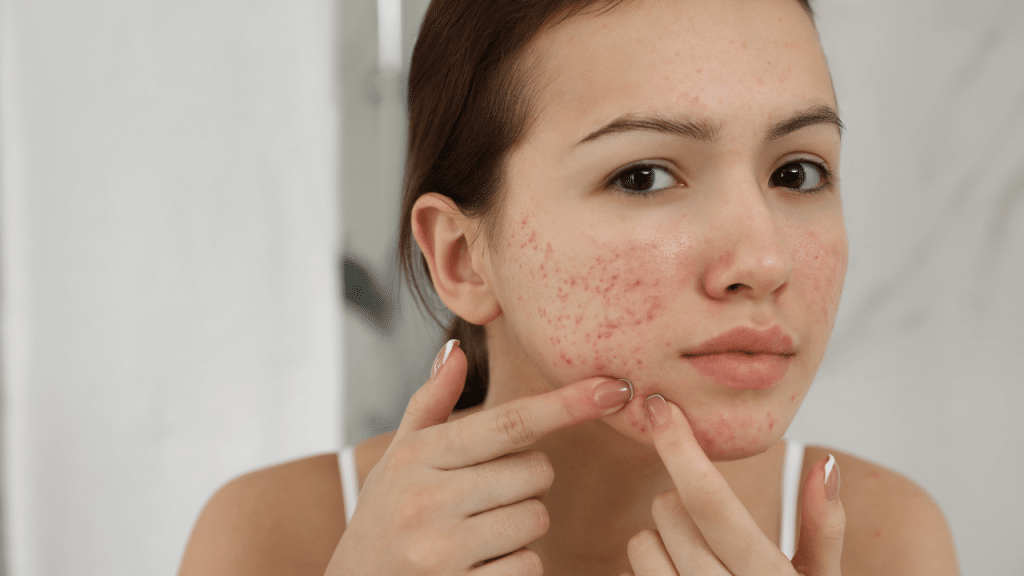
🚫 “Only dirty skin causes acne”
✔ Clean skin can still break out due to hormones.
🚫 “Toothpaste dries out pimples”
✔ It can actually burn your skin!
🚫 “You should pop your pimples”
✔ This can cause scarring and infection.
The Food-Acne Connection
Some foods may worsen acne by triggering insulin spikes, which increase oil production. What to watch out for:
- Sugary snacks and sodas
- White bread and pasta
- Excess dairy (for some people)
- Greasy fast food
Better options:
- Leafy greens, berries, nuts, whole grains
- Water-rich foods (cucumbers, watermelon)
Sports and Stress Impact on Acne Fluctuation
Managing Acne During Sports & Sweat
- Always wash your face or use wipes after workouts
- Avoid tight headbands that trap sweat
- Use non-pore-clogging sunscreen during outdoor activities
Stress + Skin: What Teens Should Know
Stress = cortisol surge = more oil production = breakouts.
Chill-out Strategies:
- 10-minute walks
- Journaling
- Breathing apps
- Talking to someone you trust
When to See a Dermatologist
See a skin specialist if:
- Pimples are painful or cystic
- Acne scars are forming
- Over-the-counter products don’t work after 8 weeks
- It’s affecting your confidence or mood
Tips for Parents

✔ Be supportive without pushing products
✔ Listen without judging or minimizing
✔ Offer to help research or schedule a derm visit
✔ Avoid saying: “It’s not that bad” or “Stop touching your face”
How to Handle Peer Comments
- Keep responses short: “Yeah, it happens to everyone.”
- Change the topic confidently
- Remember: their words reflect them, not your worth
Safe DIY Spot Treatments
- Honey + cinnamon dab (anti-inflammatory)
- Green tea ice cube (soothes redness)
- Aloe vera gel (cooling and calming)
🚫 Avoid: lemon juice, baking soda, toothpaste — they can irritate your skin!
Ingredients to Avoid in Teenage Skin
- Alcohol-based toners
- Coconut oil (too heavy)
- Fragrance-heavy creams
- Harsh scrubs with microbeads
Addressing Scarring Early
- Don’t pick or pop pimples
- Use SPF daily
- Apply niacinamide or azelaic acid to fade dark spots
- See a dermatologist for deep or textured scars
Realistic Expectations
⏳ Acne doesn’t disappear overnight.
With consistent care, most teens see improvements in 6–8 weeks. Clear skin isn’t perfection — it’s progress and confidence.
Conclusion
Puberty acne can be frustrating, but it doesn’t have to control your life. With simple habits, the right products, and support, you can keep breakouts in check and feel more confident in your skin.
Everyone’s skin is different — and that’s okay. What matters is finding what works for you, staying consistent, and remembering that acne does not define your beauty.
FAQ: Teen Acne
Q: Can I use adult acne products?
A: Some are too harsh. Look for products labeled for sensitive or teen skin.
Q: Should I wash my face more often if I have acne?
A: Twice a day is enough. Overwashing can dry and irritate your skin.
Q: Can I wear makeup if I have acne?
A: Yes! Just make sure it’s non-comedogenic and remove it at night.
📚 Resources for Teens
👀 Explore more science-backed skin and hormone insights at HormoneHealthQueen.com
📱 Follow us on social media for more skin tips and real stories
![[Puberty Acne] Survival Guide: 8 Acne-Fighting Ingredients Every Teen Needs to Know](https://hormonehealthqueen.com/wp-content/uploads/2025/05/working_out_on_period_feature-150x150.jpg)
![[Puberty Acne] Survival Guide: 8 Acne-Fighting Ingredients Every Teen Needs to Know](https://hormonehealthqueen.com/wp-content/uploads/2025/05/healthcare_for_women_feature-150x150.jpg)