
Alright, let’s get real for a second. We all know meal planning can totally feel like trying to solve a jigsaw puzzle without seeing the picture first. And when your hormones are inviting themselves to mess up your mood, energy, and even your sleep, the quest for hormone balancing through dinner becomes even more vital. But don’t sweat it; we’ve got you covered with a Hormone Balancing Dinner Guide that’s like chatting with a friend who just happens to know what they’re talking about.
And since you’re likely skimming this with one eye, contemplating throwing your phone onto the sofa while your mind bounces between tasks, let’s make this engagement as digestible as your prospective dinner. Keep reading for a scrumptious and effectual plan designed to coax those hormones back in line using hormone balancing foods!
The Evening Balancing Act
Let’s have a quick chat about the evening menu. Dinner plays an insanely crucial role when it comes to hormone health, turning the spotlight on your insulin, cortisol, and melatonin levels. You see, eating certain hormone balancing foods can influence your hormones and how well they perform in giving you that deep, restful sleep.
Evening Nutrition: Your Hormone Hero
Before diving into recipes, let’s understand what “hormone balancing foods” actually do. Imagine your hormones are a symphony. When they play in harmony, the music is brilliant. But if even one instrument is off-key—yup, chaos. So, introducing foods that promote hormone balance is like setting your body’s orchestra in tune.
Here’s a simple list of superhero foods you’ll want to invite to your dinner table:
- Lean Proteins – Think salmon, turkey, and chicken which balance insulin levels and provide a sense of fullness.
- Healthy Fats – Ayurvedic ghee, olive oil, and nuts help in mood stabilization and managing cortisol—the stress hormone.
- Fiber-Rich Vegetables – Kale, spinach, and broccoli clear excess estrogen, minimizing mood swings.
- Whole Grains – Quinoa and brown rice maintain steady blood sugar to prevent those energy crashes.
- Fermented Foods – Like kimchi or yogurt for gut health which directly impacts hormone regulation.
Planning a Hormone Balancing Dinner

Alright, let’s break it down. You want a dinner that’s easy to toss together but leaves you feeling ready to take on the world—or just crash for the night, seamlessly. Let’s get into it with a practical meal plan that won’t leave you hanging.
Crafting Your Hormone-Balancing Plate
Here’s a winning formula to plate it up the right way:
- Protein Power: Aim for a palm-sized amount if you’re a measure-it kind of person. Grilled salmon or roasted chickpeas for a vegetarian twist!
- Fabulous Fats: A good thumb-sized portion. Things like avocado or a drizzle of coconut oil can do wonders.
- Vivid Veggies: Fill at least half your plate. Don’t be shy here—go wild with a rainbow of fiber-packed vegetables.
- Whole and Hearty: Add a complex carb—like a half-cup of cooked quinoa or brown rice. Remember, it’s all about balance, not exclusion.
- 5. **Fermented Friends: Include a little side of kimchi or yogurt to cozy up the plate.
Dinner Done Right: Sample Recipes
Here comes the fun part—cooking! These recipes not only dish out hormone-helping benefits; they’re delightfully simple and ready to rock your dinner routine.
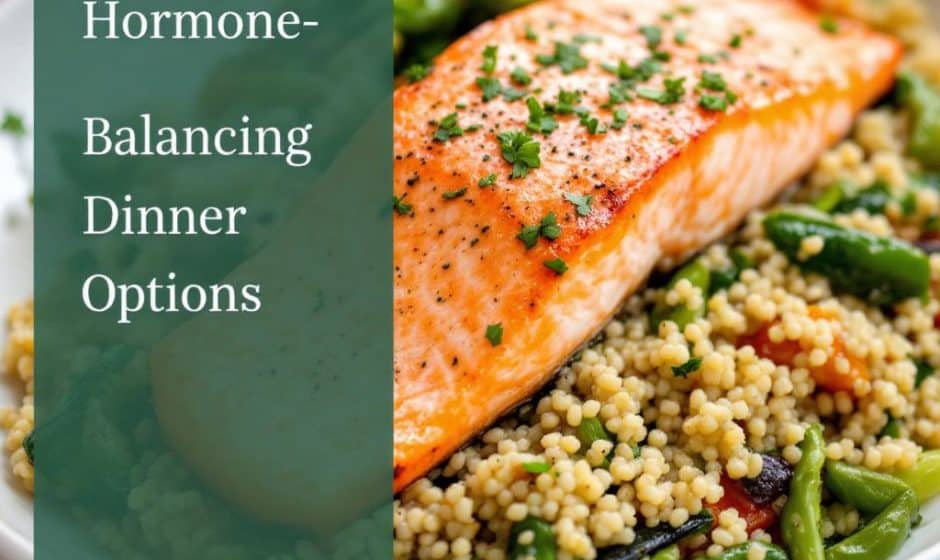
Recipe 1: Savory Herb-Crusted Salmon

Ingredients:
- oz salmon fillet
- tbsp olive oil
- tsp mixed herbs (like dill and parsley)
- Salt and pepper to taste
- Half a lemon (for squeezing)
- cup steamed broccoli or sautéed kale
How to Whip It Up:
- Preheat your oven to 400°F (approximately 200°C).
- Brush the salmon with olive oil, sprinkle on those herbs, and season with a pinch of salt and pepper.
- Place on a baking sheet and roast for about 12 to 15 minutes, depending on thickness.
- Finish by squeezing fresh lemon juice before serving atop a bed of your favorite greens or broccoli.
Recipe 2: Quinoa & Spinach Stuffed Bell Peppers
Ingredients:
- large bell peppers (your color choice!)
- cup quinoa (cooked)
- cup fresh spinach
- /4 cup feta cheese (optional)
- tbsp olive oil
- tsp oregano
- Salt and pepper to taste
Method to Feast:
- Preheat your oven to 375°F (about 190°C).
- Slice the tops off the bell peppers and scoop out the seeds.
- Mix cooked quinoa, spinach, feta, olive oil, oregano, salt, and pepper in a bowl.
- Stuff this medley into the peppers and place them in a baking dish.
- 5. Bake for 20-25 minutes until the peppers are tender.
A Few More Hormone-Friendly Dinner Ideas

- Turmeric Chicken Stir-Fry: Balances inflammation and keeps mood swings at bay.
- Miso-Glazed Eggplant: Rich in probiotics to keep your gut—and hormones—happy.
- Sweet Potato Lentil Curry: Packed with fiber, proteins, and delightful spices for a warming dish that whispers ‘relaxation.’
And if you’re still with me, here’s a thought to ponder: Choosing what we eat isn’t just a necessity—it’s a form of self-care, especially when we’re talking hormone health.
Common Missteps to Sidestep
We’ve all been there: trying too hard or reaching unsustainable extremes that make balanced living tough. Keep these in check:

- Overloading on Carbs: While whole grains are your friend, ensure balance to avoid hormonal crashes.
- Shying Away from Fats: Healthy does not mean fat-free. Those good fats fuel hormone production.
- Not Drinking Enough: Water, herbal teas, or even warm, nourishing broths woman make hormone magic.
Key Takeaways
Hormone balancing isn’t a mystical science—it’s taking joyful, small steps at every meal that lead to substantial impacts. And dinner often being your last meal before heading into rest mode, stacking your deck in favor of those satisfying zzz’s makes total sense.
Here’s the recap: Harness the power of hormone balancing foods like lean proteins, healthy fats, fiber-rich veggies, and fermented warriors. Combine them intelligently on a dinner plate, and enjoy the transformations in energy and wellbeing. Most importantly, have fun with your options! Your routine doesn’t need to be Pinterest-perfect; it just needs to work for you.
There you have it—your chatty, down-to-earth guide to a dinner that plays it smart and delicious. Trust me on this one, your hormones—and tastebuds—will thank you.
Frequently Asked Questions
What foods are best for hormone balance?
Foods rich in healthy fats, fiber, and antioxidants are particularly beneficial. Examples include avocados, flaxseeds, chia seeds, leafy greens like spinach and kale, broccoli, quinoa, berries, nuts such as almonds and walnuts, and fatty fish like salmon. These foods support hormone production, regulate estrogen levels, and promote gut health[1][3].
How do leafy greens contribute to hormone balance?
Leafy greens are high in magnesium and antioxidants, which help alleviate PMS symptoms and support the endocrine system. They also contain iron and significant amounts of magnesium, which aid in cortisol regulation and overall hormone health[1][3].
What role do omega-3 fatty acids play in hormone balance?
Omega-3 fatty acids, found in foods like chia seeds, flaxseeds, and salmon, are essential for hormone synthesis and cellular function. They also help reduce inflammation, which can disrupt hormonal balance[1][2].
How can probiotics, such as those in yogurt, help with hormone balance?
Probiotics in yogurt support a healthy gut microbiome, which is crucial for the regulation of hormones like insulin, ghrelin, and leptin. A balanced gut flora helps in the proper functioning and production of these hormones[1].
References