

Struggling with stubborn breakouts that won’t respond to typical acne treatments?
Here’s the frustrating reality: 85% of women treating hormonal acne with regular acne products are actually making their skin worse. The reason? Hormonal acne and regular breakouts require completely different approaches—yet most people can’t tell them apart.
The costly mistake: Using harsh, drying treatments on hormonal acne can trigger even more oil production and inflammation, creating a vicious cycle that leaves your skin worse than when you started.
What you’ll discover in this guide:
- The 8 key differences between hormonal acne and regular breakouts
- Specific locations and patterns that reveal your acne type
- Why timing matters more than you think
- Targeted treatment approaches for each type
Stop guessing about your skin type and start treating the real problem.
What Is Hormonal Acne vs Regular Acne?
Understanding Hormonal Acne
Hormonal acne is caused by fluctuations in your body’s hormone levels, particularly:
- Androgens (testosterone and DHEA-S) that increase oil production
- Estrogen and progesterone fluctuations during menstrual cycles
- Insulin spikes that trigger inflammation
- Cortisol elevation from chronic stress
Key characteristics:
- Appears in predictable patterns around hormonal events
- Often resistant to topical treatments alone
- Tends to be deeper, more inflamed, and painful
- Commonly affects women in their 20s, 30s, and 40s
Understanding Regular Acne
Regular acne (also called comedonal acne) is primarily caused by:
- Excess oil production from overactive sebaceous glands
- Dead skin cell buildup clogging pores
- Bacterial overgrowth (particularly P. acnes bacteria)
- External factors like products, diet, or environmental irritants
Key characteristics:
- More responsive to traditional acne treatments
- Often includes blackheads and whiteheads
- Can occur at any age but common in teens
- Usually affects the T-zone (forehead, nose, chin)
8 Ways to Tell If Your Acne Is Hormonal
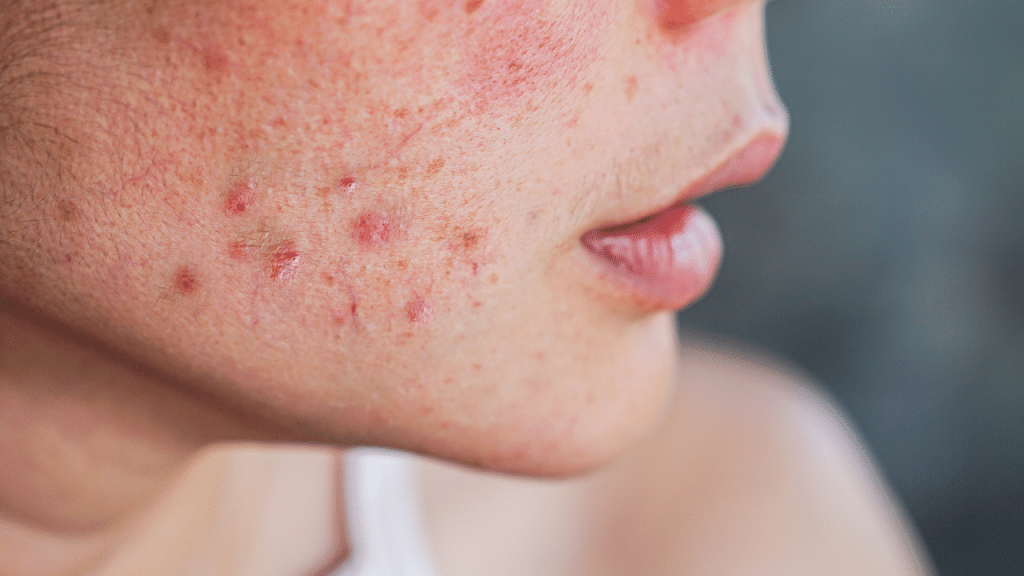
1. Location: The “Hormonal Triangle”
🚨 Hormonal acne hotspots:
- Jawline and chin: The most common hormonal acne location
- Neck area: Especially along the jawbone
- Lower cheeks: Extending from jaw upward
- Chest and back: Areas rich in hormone receptors
Regular acne locations:
- Forehead: T-zone oil production
- Nose: Large pores and blackheads
- Upper cheeks: Often product-related
- Temples: Hair product transfer
2. Type of Breakouts
Hormonal acne characteristics:
- Deep, cystic bumps that feel like knots under the skin
- Painful to touch before they even surface
- Few to no blackheads or surface-level whiteheads
- Red, inflamed nodules that take weeks to heal
Regular acne characteristics:
- Blackheads and whiteheads (comedones)
- Surface-level pimples that come to a head quickly
- Less painful overall
- Mix of different acne types in the same area
3. Timing and Patterns
Hormonal acne timing:
- Cyclical breakouts that worsen 7-10 days before periods
- Stress-related flare-ups during major life events
- Consistent monthly patterns you can predict
- Worsening during hormonal transitions (puberty, pregnancy, menopause)
Regular acne timing:
- Random breakouts without clear patterns
- Product or diet-related timing
- Seasonal changes (humidity, weather)
- Inconsistent patterns month to month
4. Age of Onset
Hormonal acne typically:
- Starts or worsens in your 20s, 30s, or 40s
- Persists into adulthood even if you had clear skin as a teen
- Appears for the first time during hormonal changes
- Continues past typical “acne age”
Regular acne typically:
- Begins during puberty (teens to early 20s)
- Improves with age as oil production normalizes
- Responds well to traditional teenage acne treatments
- Rare onset after age 25 without hormonal factors
5. Response to Traditional Treatments
Hormonal acne response:
- Minimal improvement with over-the-counter products
- Temporary results that don’t last
- Worsening with harsh, drying treatments
- Better response to hormonal interventions
Regular acne response:
- Good improvement with salicylic acid and benzoyl peroxide
- Consistent results with proper skincare routine
- Responds well to topical retinoids
- Improvement with gentle exfoliation
6. Associated Symptoms
Hormonal acne often comes with:
- Irregular periods or PMS symptoms
- Mood swings and irritability
- Weight gain around the midsection
- Hair thinning or excess facial hair
- Fatigue and energy fluctuations
Regular acne typically:
- Occurs alone without other systemic symptoms
- No correlation with menstrual cycles
- Stable energy and mood patterns
- No other hormonal symptoms
7. Healing Patterns
Hormonal acne healing:
- Slow healing process taking 2-6 weeks per breakout
- Deep scarring potential due to inflammation
- Post-inflammatory hyperpigmentation that lasts months
- Leaves dark marks even after healing
Regular acne healing:
- Faster healing typically 3-7 days for surface breakouts
- Less scarring overall
- Quicker fading of post-acne marks
- Better response to spot treatments
8. Stress Connection
Hormonal acne and stress:
- Direct correlation with life stressors
- Flare-ups during major life changes
- Worsens with chronic stress or lack of sleep
- Improves with stress management techniques
Regular acne and stress:
- Less direct connection to emotional stress
- More related to physical stress (touching face, harsh products)
- Environmental factors play bigger role
- Lifestyle factors like diet and hygiene more impactful
Location Mapping: Where Your Acne Appears Matters
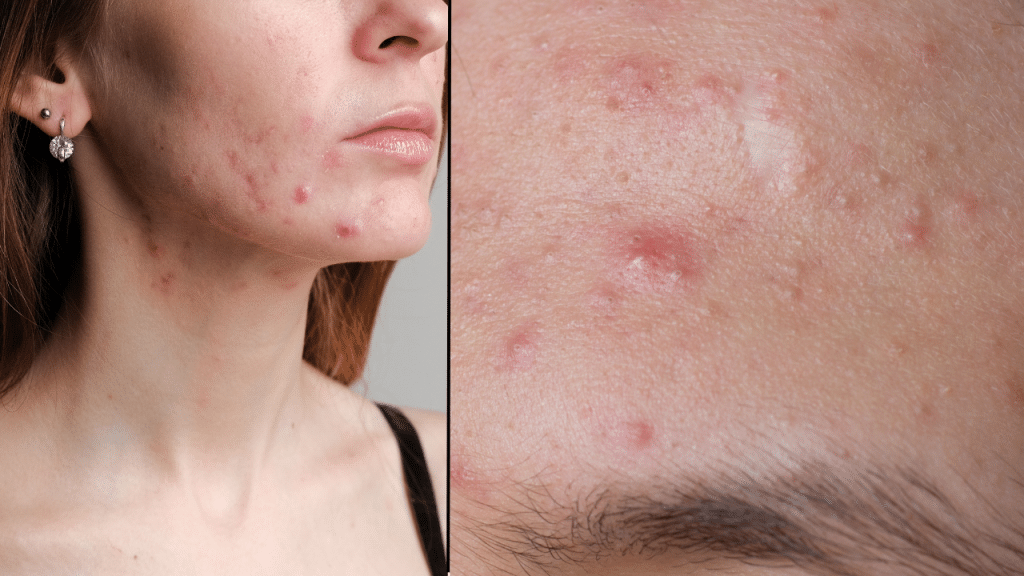
The Hormonal Acne Face Map
Lower face (hormonal zone):
- Jawline: Classic hormonal acne location
- Chin: Especially center and sides
- Lower cheeks: Below the cheekbone
- Neck: Along the jawbone and upper neck
Why these areas? These regions have more hormone receptors and are particularly sensitive to testosterone fluctuations.
The Regular Acne Face Map
T-zone (oily zone):
- Forehead: Higher oil production
- Nose: Large pores and blackheads
- Center chin: Part of T-zone oil pattern
- Between eyebrows: Product buildup area
Upper face areas:
- Temples: Hair product transfer
- Upper cheeks: Often cosmetic-related
- Around hairline: Hair product contact
Mixed Acne Patterns
Some people have both types:
- Hormonal acne on jawline and chin
- Regular acne in T-zone areas
- Different treatments needed for different areas
- Requires combination approach
Age and Timing: The Biggest Clues
Teenage Acne (13-19 years)
- Usually regular acne triggered by puberty
- Affects T-zone primarily
- Responds well to standard treatments
- Often improves naturally with age
Adult Acne (20s-30s)
- Often hormonal acne related to adult life stressors
- Lower face pattern more common
- Cyclical with periods
- May worsen with birth control changes
Mature Acne (40s+)
- Almost always hormonal related to perimenopause
- Difficult to treat with traditional methods
- Often accompanied by other hormonal symptoms
- Requires hormone-aware treatment
Monthly Timing Patterns
Track these patterns for 3 months:
Week 1 (Days 1-7 of cycle):
- Hormonal acne often calmer
- Regular acne unchanged
Week 2 (Days 8-14):
- Generally clearer skin for hormonal acne
- Regular acne may vary with external factors
Week 3 (Days 15-21):
- Hormonal acne may start forming
- Regular acne continues baseline pattern
Week 4 (Days 22-28):
- Hormonal acne flare-up peaks
- Regular acne unaffected by cycle timing
Treatment Differences That Change Everything
Hormonal Acne Treatment Approach
Internal treatments (most effective):
- Hormone regulation through diet and lifestyle
- Stress management techniques
- Supplements like spearmint tea, omega-3s
- Medical interventions like spironolactone or birth control
External treatments:
- Gentle, anti-inflammatory skincare
- Avoid harsh drying products
- Zinc-based spot treatments
- Consistent, simple routine
Dietary considerations:
- Reduce dairy and high-glycemic foods
- Anti-inflammatory diet focus
- Blood sugar stability
- Gut health support
Regular Acne Treatment Approach
External treatments (most effective):
- Salicylic acid for exfoliation
- Benzoyl peroxide for bacterial control
- Retinoids for cell turnover
- Consistent cleansing routine
Internal support:
- General healthy diet
- Adequate hydration
- Basic vitamins and minerals
- Good hygiene practices
Product recommendations:
- Active ingredients that target oil and bacteria
- Regular exfoliation
- Clay masks for oil control
- Non-comedogenic products
What to Do Based on Your Acne Type
If You Have Hormonal Acne:
Immediate steps (this week):
- Start tracking your breakouts with your menstrual cycle
- Eliminate dairy from your diet for 30 days
- Switch to gentle skincare products
- Begin stress management practices
This month:
- See a healthcare provider who understands hormonal acne
- Request hormone testing (testosterone, DHEA-S, insulin)
- Try spearmint tea (2 cups daily)
- Add omega-3 supplements
Long-term approach:
- Work with specialists (dermatologist, endocrinologist)
- Consider medical treatments if needed
- Focus on internal healing
- Be patient – hormonal treatments take 3-6 months
If You Have Regular Acne:
Immediate steps (this week):
- Start consistent skincare routine with proven ingredients
- Add salicylic acid or benzoyl peroxide
- Evaluate hair and face products for pore-clogging ingredients
- Improve hygiene habits
This month:
- Try over-the-counter retinoid
- Add clay mask 1-2x weekly
- Evaluate diet for potential triggers
- Be consistent with new routine
Long-term approach:
- See dermatologist if no improvement in 6-8 weeks
- Consider prescription treatments
- Focus on external treatments
- Expect faster results than hormonal acne
If You Have Mixed Acne:
Targeted approach:
- Treat different areas with different products
- Use gentle hormonal approach on lower face
- Use traditional treatments on T-zone
- Track which areas respond to what treatments
Common Mistakes That Make Acne Worse
Hormonal Acne Mistakes:
❌ Using harsh, drying products
- Strips natural oils, triggers more oil production
- Increases inflammation
- Makes cystic acne more painful
❌ Over-treating with actives
- Salicylic acid and retinoids can irritate hormonal acne
- Multiple actives cause barrier damage
- Worsens underlying inflammation
❌ Focusing only on topical treatments
- Ignores internal hormone imbalance
- Provides temporary results at best
- Misses root cause of problem
❌ Getting impatient with treatment
- Switching products too quickly
- Not addressing lifestyle factors
- Expecting quick fixes for hormonal issues
Regular Acne Mistakes:
❌ Using products that are too gentle
- Not addressing oil production
- Insufficient exfoliation
- Allowing bacteria to proliferate
❌ Inconsistent routine
- Skipping treatments
- Using products irregularly
- Not giving treatments time to work
❌ Over-complicating the routine
- Using too many products
- Mixing incompatible ingredients
- Creating more problems than solutions
Frequently Asked Questions
Q: Can you have both hormonal acne and regular acne at the same time?
A: Yes, many people have mixed acne types – hormonal cysts on the jawline plus blackheads in the T-zone. This requires treating different areas with different approaches.
Q: Why doesn’t my hormonal acne respond to regular acne products?
A: Hormonal acne is caused by internal hormone fluctuations, not surface oil and bacteria. Harsh products like benzoyl peroxide can’t address hormone imbalances and often make inflammation worse.
Q: Do birth control pills help with hormonal acne?
A: Some birth control pills help by regulating hormones, while others can worsen acne. The effect varies by individual and specific hormone formulation.
Q: Is hormonal acne permanent?
A: No, hormonal acne is not permanent. With proper treatment addressing hormone imbalance, most women see significant improvement, though ongoing management may be needed.
Q: What’s the difference between cystic acne and hormonal acne?
A: Cystic acne describes the type of breakout (deep, painful bumps), while hormonal acne describes the cause (hormone fluctuations). Hormonal acne often presents as cystic, but not all cystic acne is hormonal.
Take Action: Identify Your Acne Type Today
Quick Self-Assessment:
Answer these questions:
- Where do your breakouts occur?
- Mainly jawline/chin = Likely hormonal
- T-zone/forehead = Likely regular
- When do breakouts worsen?
- Before your period = Hormonal
- No clear pattern = Regular
- What type of breakouts do you get?
- Deep, painful cysts = Hormonal
- Blackheads/surface pimples = Regular
- How old were you when acne started/worsened?
- 20s/30s/40s = Likely hormonal
- Teens = Likely regular
- How do your breakouts respond to traditional acne products?
- Poorly/get worse = Hormonal
- Well/improve = Regular
Explore Our Website HormoneHealthQueen.com for Complete Support!