
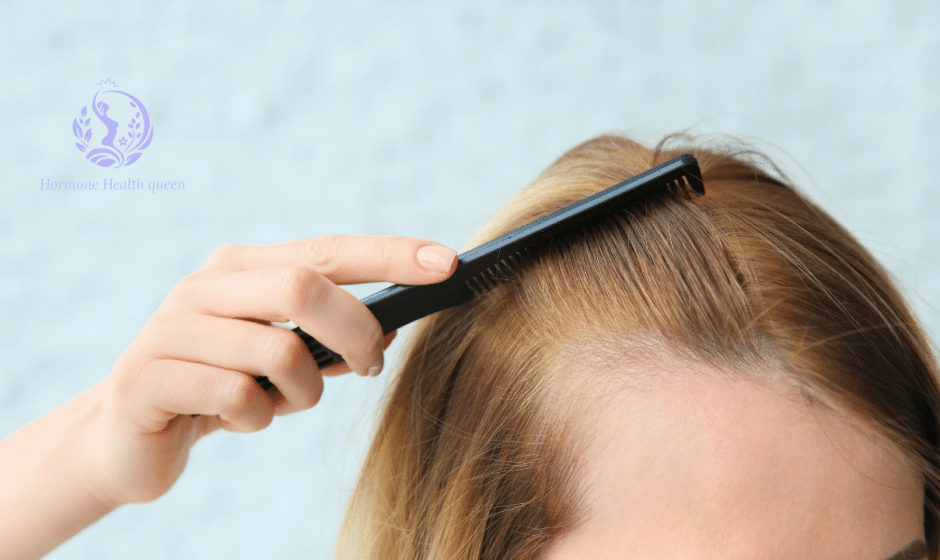

Noticing more hair in your brush lately and wondering if it’s normal or something more serious?
Here’s the concerning reality: Over 50% of women will experience female pattern baldness by age 50, yet most don’t recognize the early warning signs until significant hair loss has already occurred. The difference between normal daily hair shedding and the beginning stages of female pattern baldness can be subtle but crucial to identify.
The costly delay: Many women dismiss early signs as “stress” or “getting older,” losing precious time when treatments are most effective. Early intervention can slow progression and even restore some lost hair—but only if you recognize the signs in time.
What you’ll discover in this comprehensive guide:
- The 7 key differences between normal hair loss and female pattern baldness
- Specific patterns and locations that reveal hair loss type
- Self-assessment tools to evaluate your hair loss
- When to seek professional help and what treatments work
Understanding your hair loss type is the first step toward keeping the hair you have and potentially regrowing what you’ve lost.
Understanding Normal Hair Loss vs Female Pattern Baldness
What Is Normal Daily Hair Loss?
Healthy hair shedding characteristics:
- 50-100 hairs per day is completely normal
- Temporary increases during stress, illness, or hormonal changes
- Hair regrows in the same locations at normal thickness
- No pattern to where hair falls out
- Seasonal variations are common and temporary
Normal triggers for increased shedding:
- Postpartum period (3-6 months after giving birth)
- Major stress or illness
- Crash dieting or nutritional deficiencies
- Medication changes or new prescriptions
- Seasonal changes (often more shedding in fall)
What Is Female Pattern Baldness?
Female pattern baldness (androgenetic alopecia) characteristics:
- Progressive thinning that worsens over time
- Genetic predisposition runs in families
- Hormone-driven by sensitivity to DHT (dihydrotestosterone)
- Predictable patterns of hair loss
- Permanent without treatment intervention
Key differences from normal loss:
- Doesn’t regrow on its own
- Specific location patterns
- Hair texture changes (becomes finer and shorter)
- Progressive worsening over months and years
- Responds to specific treatments
7 Ways to Identify Female Pattern Baldness
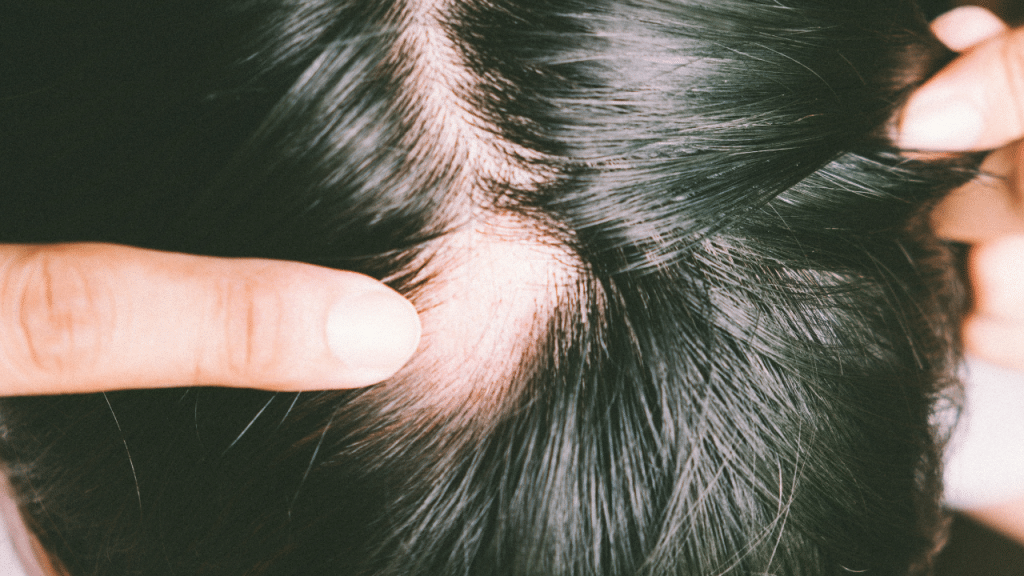
1. Location Pattern: The “Christmas Tree” Shape
Classic female pattern baldness locations:
- Crown area thinning that gradually expands
- Center part widening creating a “Christmas tree” shape
- Frontal hairline usually remains intact (unlike male pattern baldness)
- Temples may show minimal recession
- Back and sides typically remain unaffected
Normal hair loss patterns:
- Diffuse shedding all over the scalp
- No specific pattern or concentrated areas
- Temporary thinning in various locations
- Hairline typically stays the same
2. Hair Texture Changes
Female pattern baldness hair changes:
- Miniaturization process: Hair becomes progressively finer and shorter
- Vellus hair: Thick terminal hairs become thin, colorless “peach fuzz”
- Reduced hair diameter makes ponytails thinner
- Shorter growth cycle means hair doesn’t grow as long
Normal hair texture:
- Consistent thickness across the scalp
- No miniaturization of hair strands
- Same growth length as before
- Temporary texture changes only during stress or illness
3. Progression Timeline
Female pattern baldness progression:
- Gradual onset over months to years
- Steadily worsening without intervention
- Predictable stages (Ludwig Scale I, II, III)
- Accelerated during hormonal changes (menopause, PCOS)
Normal hair loss timeline:
- Sudden onset related to specific triggers
- Temporary duration (usually 3-6 months)
- Natural recovery once trigger resolves
- Cyclical patterns that come and go
4. Family History Patterns
Female pattern baldness genetics:
- Strong family history on mother’s or father’s side
- Multiple affected relatives across generations
- Similar onset age among family members
- Inherited sensitivity to DHT hormone
Normal hair loss genetics:
- No consistent family pattern
- Temporary triggers affect all family members differently
- Recovery patterns vary by individual
- Not necessarily inherited
5. Age of Onset
Female pattern baldness timing:
- Can begin in 20s but more common after 30
- Accelerates significantly during perimenopause/menopause
- Progresses throughout middle age and beyond
- Earlier onset often indicates more aggressive progression
Normal hair loss timing:
- Any age in response to triggers
- Postpartum hair loss in 20s-40s
- Stress-related at any life stage
- Recovery regardless of age
6. Response to Treatments
Female pattern baldness treatment response:
- Requires specific DHT-blocking treatments
- Responds to minoxidil (Rogaine) and prescription medications
- Lifestyle changes alone are insufficient
- Early treatment more effective than late intervention
Normal hair loss treatment response:
- Resolves naturally once trigger is addressed
- Responds to stress management, nutrition, gentle care
- Supplements may help if deficiency-related
- Doesn’t require prescription hair loss medications
7. Associated Symptoms
Female pattern baldness often occurs with:
- Androgenic symptoms: Increased facial hair, acne, irregular periods
- PCOS indicators: Weight gain around midsection, insulin resistance
- Thyroid dysfunction (often coexisting)
- Hormonal imbalances affecting multiple body systems
Normal hair loss typically:
- Occurs in isolation without other hormonal symptoms
- Related to identifiable stressors or life changes
- No other androgenic signs
- General health otherwise normal
The Female Pattern Baldness Progression Map
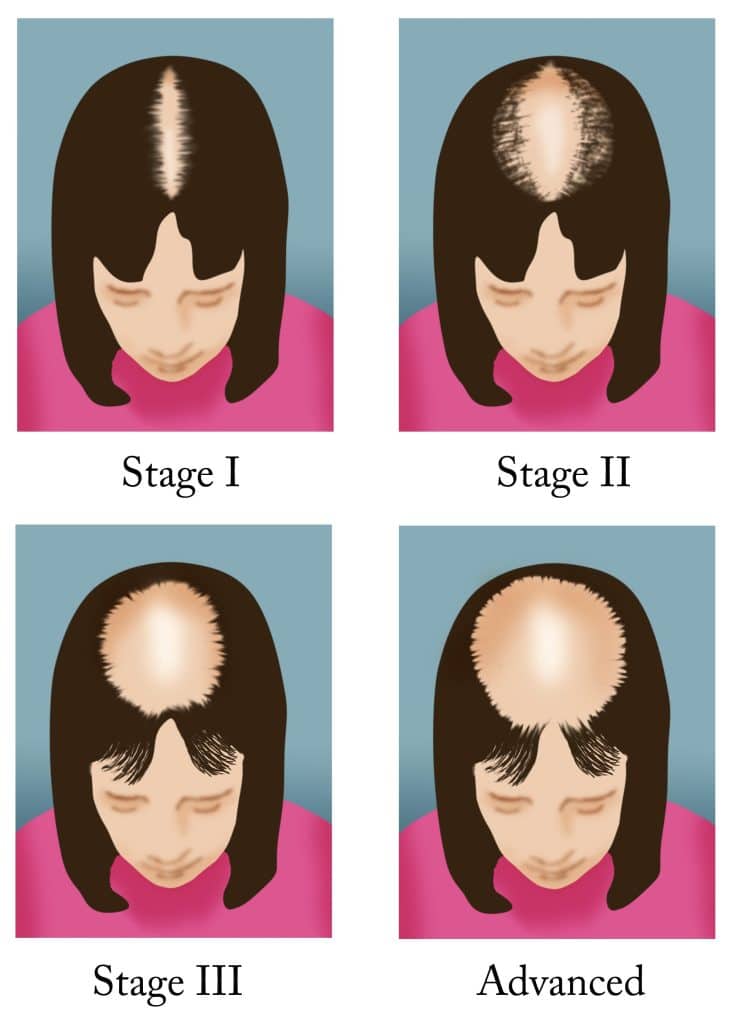
Stage I (Early/Mild): Ludwig Scale I
Visible changes:
- Minimal thinning at the crown
- Slightly wider center part
- May not be noticeable to others yet
- Hair density reduced by 20-30%
What you might notice:
- Ponytails feel thinner
- Scalp more visible in bright light
- Hair takes longer to style with volume
- Photos show more scalp visibility
Stage II (Moderate): Ludwig Scale II
Visible changes:
- Noticeable thinning at crown and part
- “Christmas tree” pattern becomes apparent
- Scalp clearly visible through hair
- Hair density reduced by 30-50%
What becomes obvious:
- Others may comment on thinning
- Styling becomes more challenging
- Need for volumizing products increases
- Confidence about hair may decrease
Stage III (Advanced): Ludwig Scale III
Visible changes:
- Significant hair loss across crown area
- Extensive scalp visibility
- Hairline may begin to show recession
- Hair density reduced by 50%+ in affected areas
Impact on daily life:
- Hairstyle options become limited
- May consider wigs or hair pieces
- Psychological impact significant
- Treatment becomes more challenging
Common Causes and Risk Factors
Genetic Factors
Inherited predisposition:
- Family history on either parent’s side
- Multiple genes involved (not just one)
- Ethnicity influences: More common in Caucasian women
- Age of onset often similar to affected relatives
Hormonal Triggers
Androgen sensitivity:
- DHT (dihydrotestosterone) is the primary culprit
- Testosterone conversion to DHT in hair follicles
- Increased sensitivity rather than increased hormone levels
- Progesterone decline during menopause removes protective effects
Hormonal conditions that accelerate female pattern baldness:
- PCOS (Polycystic Ovary Syndrome)
- Thyroid dysfunction (hypo or hyperthyroidism)
- Menopause and perimenopause
- Insulin resistance and metabolic syndrome
Lifestyle and Environmental Factors
Factors that may accelerate progression:
- Chronic stress elevating cortisol levels
- Poor nutrition lacking protein and essential vitamins
- Tight hairstyles causing additional tension
- Chemical processing weakening already vulnerable hair
Protective factors:
- Stress management techniques
- Anti-inflammatory diet rich in nutrients
- Gentle hair care practices
- Early intervention with appropriate treatments
Self-Assessment: Evaluate Your Hair Loss
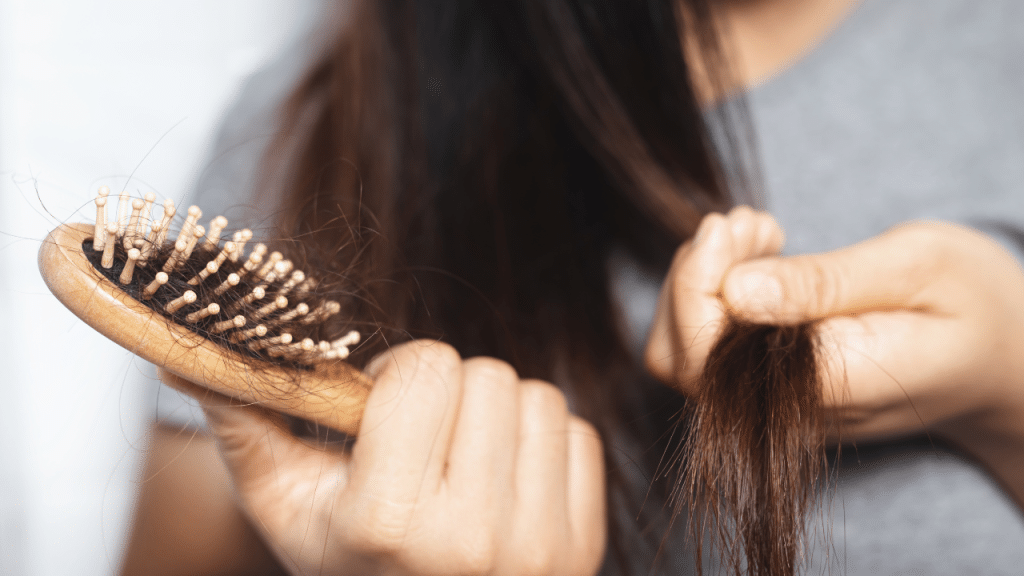
The Pull Test
How to perform:
- Don’t wash hair for 24-48 hours
- Gently grasp 50-60 hairs between thumb and forefinger
- Pull slowly from scalp to ends with steady pressure
- Count hairs that come out
Results interpretation:
- 1-3 hairs: Normal
- 4-6 hairs: Possible increased shedding
- 7+ hairs: Suggests active hair loss requiring evaluation
The Part Width Test
How to assess:
- Take photos of your part in good lighting monthly
- Measure part width with a ruler
- Compare photos over 3-6 months
- Note any widening or scalp visibility changes
Signs of concern:
- Progressive widening over time
- Increased scalp visibility
- “Christmas tree” shape development
- Thinning extending beyond original part
The Ponytail Test
Monthly assessment:
- Create same ponytail in same location
- Measure circumference with measuring tape
- Take photos for visual comparison
- Track changes over time
Warning signs:
- Decreasing ponytail circumference
- Need for additional hair ties
- Visible thinning in ponytail photos
- Hair feels less dense overall
Documentation Strategy
Create a hair loss journal:
- Monthly photos in consistent lighting
- Measurements of part width and ponytail circumference
- Symptom tracking (itching, tenderness, texture changes)
- Trigger notation (stress, diet, medications, hormonal changes)
When to Seek Professional Help
Red Flag Symptoms Requiring Immediate Attention
See a dermatologist or trichologist if you experience:
- Sudden, rapid hair loss over weeks rather than months
- Patchy bald spots or circular areas of loss
- Scalp inflammation with redness, scaling, or itching
- Hair loss with scarring or permanent damage to follicles
- Associated symptoms like severe fatigue, weight changes, or irregular periods
Timeline for Professional Consultation
Seek help within 3 months if:
- Self-assessment tests consistently show concerning results
- Family history of female pattern baldness exists
- Progressive thinning despite addressing lifestyle factors
- Psychological impact affecting quality of life
Benefits of early consultation:
- Accurate diagnosis distinguishing between hair loss types
- Baseline documentation for tracking progression
- Treatment options most effective when started early
- Peace of mind or appropriate intervention plan
What to Expect During Professional Evaluation
Comprehensive assessment includes:
- Medical history review including family history
- Physical examination of scalp and hair
- Pull test performed by professional
- Dermoscopy for detailed follicle examination
- Blood tests to rule out underlying conditions
- Photography for baseline documentation
Treatment Options That Actually Work
FDA-Approved Treatments
Minoxidil (Rogaine):
- Only FDA-approved topical treatment for female pattern baldness
- 2% and 5% concentrations available
- Requires consistent daily application
- Results visible in 3-6 months with continued improvement
- Prevents further loss and may regrow some hair
How minoxidil works:
- Increases blood flow to hair follicles
- Extends hair growth phase
- Helps reverse miniaturization process
- Most effective on crown area
Prescription Medications
Spironolactone:
- Anti-androgen medication that blocks DHT
- Requires prescription and medical monitoring
- Effective for women with hormonal hair loss
- Blood tests needed to monitor potassium levels
Low-dose oral minoxidil:
- Newer treatment option gaining popularity
- Systemic effect may be more effective than topical
- Requires medical supervision
- Side effects need monitoring
Professional Procedures
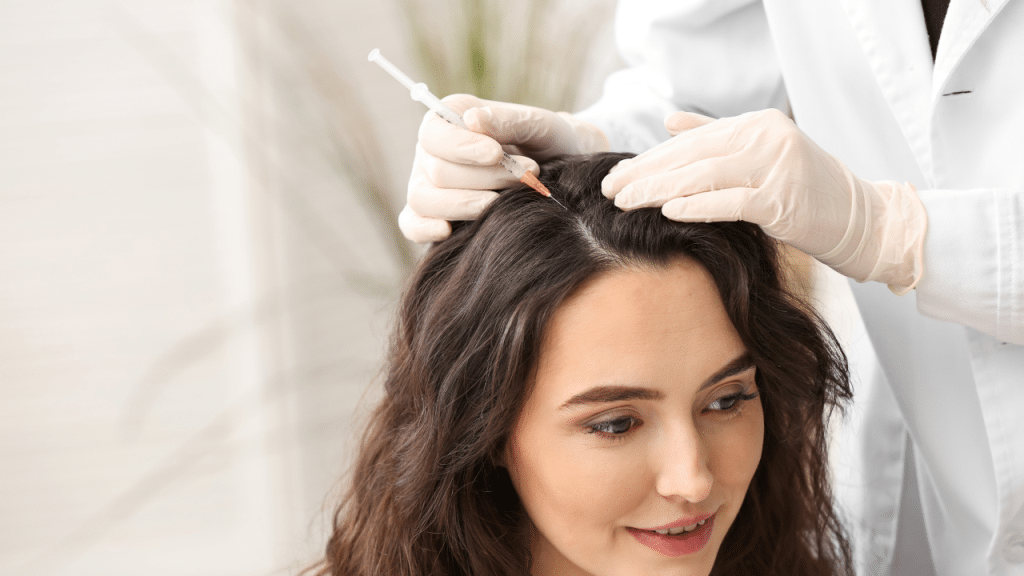
Platelet-Rich Plasma (PRP):
- Growth factors from your own blood stimulate follicles
- Series of treatments typically required
- Good results when combined with other treatments
- Minimal side effects
Low-Level Laser Therapy (LLLT):
- FDA-cleared devices available for home use
- Stimulates cellular activity in hair follicles
- Requires consistent use for results
- Can complement other treatments
Natural Support Strategies
Nutritional interventions:
- Iron supplementation if deficient
- Protein intake of 0.8-1g per kg body weight
- Biotin, vitamin D, and zinc for hair health
- Anti-inflammatory diet to reduce systemic inflammation
Gentle hair care practices:
- Minimize heat styling and chemical processing
- Use wide-tooth combs and gentle brushes
- Avoid tight hairstyles that create tension
- Silk pillowcases to reduce friction
Frequently Asked Questions
Q: Can female pattern baldness be reversed completely?
A: While it can’t be completely “cured,” early treatment can significantly slow progression and regrow some hair. The key is starting treatment before too much miniaturization occurs.
Q: Is female pattern baldness related to PCOS?
A: Yes, women with PCOS have higher rates of female pattern baldness due to elevated androgen levels and increased insulin resistance affecting hair follicles.
Q: Can birth control pills affect female pattern baldness?
A: Yes, androgenic birth control pills can worsen female pattern baldness, while anti-androgenic formulations may help. Stopping birth control can also trigger temporary hair loss.
Q: Can diet and supplements prevent female pattern baldness?
A: While they can’t prevent genetic hair loss, proper nutrition supports overall hair health and may slow progression. Deficiencies in iron, protein, or vitamins can worsen any hair loss.
Q: Is hair transplant surgery an option for women?
A: Hair transplants can work for women but are typically reserved for stable, advanced cases. Women often don’t have sufficient donor hair density compared to men.
Your Hair Loss Assessment Action Plan
This Week: Initial Evaluation
- Perform self-assessment tests (pull test, part width measurement, ponytail check)
- Take baseline photos in good lighting from multiple angles
- Start documenting daily hair loss and any triggers
- Review family history of hair loss patterns
This Month: Professional Assessment
- Schedule consultation with dermatologist or trichologist if tests show concern
- Get blood work to rule out underlying conditions (thyroid, iron, hormones)
- Research treatment options appropriate for your situation
- Begin gentle hair care practices regardless of diagnosis
Ongoing Monitoring:
- Monthly progress photos and measurements
- Track treatment response if starting interventions
- Adjust approach based on professional recommendations
- Stay consistent with chosen treatment plan
Remember: Early recognition and intervention are key to successful hair loss treatment. Don’t wait until the problem becomes severe—the sooner you identify and address female pattern baldness, the better your chances of preserving and potentially regrowing your hair.
Take control of your hair health today. Your future self will thank you for acting now rather than waiting.
Ready to dive deeper? Explore hormonehealthqueen.com for more info!
Follow us on social media!