

Worried about whether your current skincare routine is safe for pregnancy?
Here’s the shocking reality: Up to 70% of pregnant women are unknowingly using skincare ingredients that could potentially harm their developing baby. Many common skincare ingredients—from acne treatments to anti-aging serums—haven’t been tested for pregnancy safety or are known to cause complications.
The dangerous gap: Most skincare products don’t clearly label pregnancy safety, leaving expectant mothers to navigate confusing ingredient lists without proper guidance. Using the wrong products could lead to birth defects, developmental issues, or pregnancy complications.
What you’ll discover in this comprehensive guide:
- The complete list of skincare ingredients to avoid during pregnancy
- Safe alternatives for every skincare concern
- Trimester-by-trimester skincare adjustments
- How to build an effective pregnancy safe skincare routine
Your baby’s health starts with the choices you make every day—including what you put on your skin.
Why Pregnancy Safe Skincare Matters
Image Alt Text: Pregnancy safe skincare products arranged with baby items showing ingredient safety comparison
How Skincare Ingredients Affect Your Baby
The skin absorption reality:
- Your skin absorbs up to 60% of what you apply topically
- Ingredients enter bloodstream and can cross the placental barrier
- Developing babies are most vulnerable to toxic exposure
- First trimester is especially critical for organ development
Proven risks from unsafe ingredients:
- Birth defects from retinoids and certain acids
- Developmental delays from hormone disruptors
- Pregnancy complications from high-dose actives
- Long-term health effects that may not appear until later
The Pregnancy Skincare Challenge
What makes this complicated:
- Hormonal changes affect how your skin reacts
- Increased sensitivity to products you previously tolerated
- New skin concerns like melasma and stretch marks
- Limited research on many ingredients during pregnancy
Why “natural” doesn’t always mean safe:
- Some natural ingredients are potent and unsafe
- Essential oils can be particularly problematic
- Plant-based doesn’t guarantee pregnancy safety
- Concentration and usage matter significantly
Dangerous Ingredients to Avoid Completely
❌ Retinoids (Category X – Highest Risk)
All forms to avoid:
- Retinol and retinyl palmitate (even low concentrations)
- Tretinoin (Retin-A) and adapalene
- Isotretinoin (Accutane) – causes severe birth defects
- Retinaldehyde and other vitamin A derivatives
Why they’re dangerous:
- Proven teratogenic effects (cause birth defects)
- Neural tube defects and brain malformations
- Heart defects and facial deformities
- Risk exists even with topical use
❌ High-Dose Salicylic Acid
What to avoid:
- BHA peels and professional treatments
- Concentrations above 2% in leave-on products
- Aspirin-based topical treatments
- Willow bark extract in high concentrations
Safety concerns:
- Oral salicylic acid linked to birth defects
- High topical doses may have similar risks
- Bleeding complications during pregnancy
- Low doses (under 2%) generally considered safe
❌ Hydroquinone
Where it’s found:
- Skin lightening creams and serums
- Melasma treatments (ironic, since pregnancy causes melasma)
- Dark spot correctors
- Professional lightening treatments
Why it’s problematic:
- High absorption rate through skin
- Potential carcinogen concerns
- Unknown effects on fetal development
- Safer alternatives available for pigmentation
❌ Certain Essential Oils
Oils to completely avoid:
- Sage, rosemary, and thyme (can stimulate contractions)
- Jasmine and clary sage (uterine stimulants)
- Juniper and pennyroyal (toxic effects)
- Wintergreen (high salicylate content)
General essential oil cautions:
- Highly concentrated and potent
- Hormone-disrupting potential
- Skin sensitivity increases during pregnancy
- Always dilute if using any oils
❌ Formaldehyde and Formaldehyde Releasers
Hidden names to watch for:
- DMDM hydantoin and diazolidinyl urea
- Imidazolidinyl urea and quaternium-15
- Bronopol and 5-bromo-5-nitro-1,3-dioxane
- Glyoxal and methenamine
Health risks:
- Known carcinogen with developmental risks
- Respiratory irritation
- Skin sensitization
- Cumulative exposure concerns
❌ Certain Chemical Sunscreens
Ingredients to avoid:
- Oxybenzone (hormone disruptor)
- Octinoxate (endocrine effects)
- Homosalate (hormone interference)
- Octocrylene (potential allergen)
Safer alternatives:
- Zinc oxide and titanium dioxide
- Mineral sunscreens only
- Physical blockers are pregnancy safe
- Broad spectrum SPF 30+ recommended
Safe Skincare Ingredients for Pregnancy

✅ Gentle Cleansing Ingredients
Safe and effective options:
- Glycerin for hydration
- Ceramides for barrier support
- Hyaluronic acid for moisture
- Mild surfactants like cocamidopropyl betaine
✅ Pregnancy Safe Actives
Vitamin C (L-ascorbic acid):
- Antioxidant protection against environmental damage
- Collagen support for skin elasticity
- Safe for daily use in appropriate concentrations
- Brightening effects for pregnancy-related pigmentation
Niacinamide (Vitamin B3):
- Reduces inflammation and redness
- Controls oil production for pregnancy acne
- Strengthens skin barrier
- Safe at up to 10% concentration
Azelaic acid:
- Gentle exfoliation without irritation
- Anti-inflammatory properties
- Safe for sensitive pregnancy skin
- Helps with acne and pigmentation
Low-concentration glycolic acid:
- Under 10% concentration only
- Gentle exfoliation for dull skin
- Improves texture safely
- Avoid high-concentration peels
✅ Hydrating and Soothing Ingredients
Hyaluronic acid:
- Holds 1000x its weight in water
- Plumps fine lines naturally
- Safe for all pregnancy stages
- Works for all skin types
Ceramides:
- Restore skin barrier function
- Prevent moisture loss
- Reduce sensitivity
- Support healthy skin function
Peptides:
- Collagen support without retinoids
- Anti-aging benefits safely
- Skin repair and renewal
- Generally safe during pregnancy
Squalane:
- Lightweight hydration
- Non-comedogenic
- Mimics natural skin oils
- Safe and gentle
✅ Safe Sun Protection
Mineral sunscreens:
- Zinc oxide (safe and effective)
- Titanium dioxide (pregnancy approved)
- Physical barrier protection
- No absorption into bloodstream
Common Pregnancy Skin Concerns and Safe Solutions
Pregnancy Acne
Safe treatment approach:
- Gentle cleansing with mild, non-comedogenic cleansers
- Low-dose salicylic acid (under 2%) for spot treatment
- Niacinamide serums to control oil and inflammation
- Azelaic acid for gentle exfoliation and bacteria control
What to avoid:
- High-dose BHA peels
- Benzoyl peroxide in high concentrations
- Oral antibiotics like tetracycline
- Any retinoid treatments
Melasma and Hyperpigmentation
Safe brightening options:
- Vitamin C serums for gentle lightening
- Kojic acid in low concentrations
- Licorice root extract for natural brightening
- Consistent sunscreen use with zinc oxide
Prevention strategies:
- Broad-spectrum SPF 30+ daily
- Wide-brimmed hats and shade seeking
- Gentle exfoliation with safe acids
- Consistent routine throughout pregnancy
Stretch Marks
Prevention and care:
- Rich moisturizers with ceramides and hyaluronic acid
- Bio-oil or similar pregnancy-safe oils
- Gentle massage to improve circulation
- Stay hydrated and maintain healthy weight gain
Ingredients that help:
- Cocoa butter and shea butter
- Vitamin E oil (topical)
- Centella asiatica extract
- Collagen-supporting peptides
Increased Sensitivity
Gentle skincare approach:
- Fragrance-free products only
- Minimal ingredient formulations
- Patch testing new products
- Cool water for cleansing
Soothing ingredients:
- Aloe vera gel
- Chamomile extract
- Oat extract (colloidal oatmeal)
- Calendula extract
Building Your Pregnancy Safe Skincare Routine
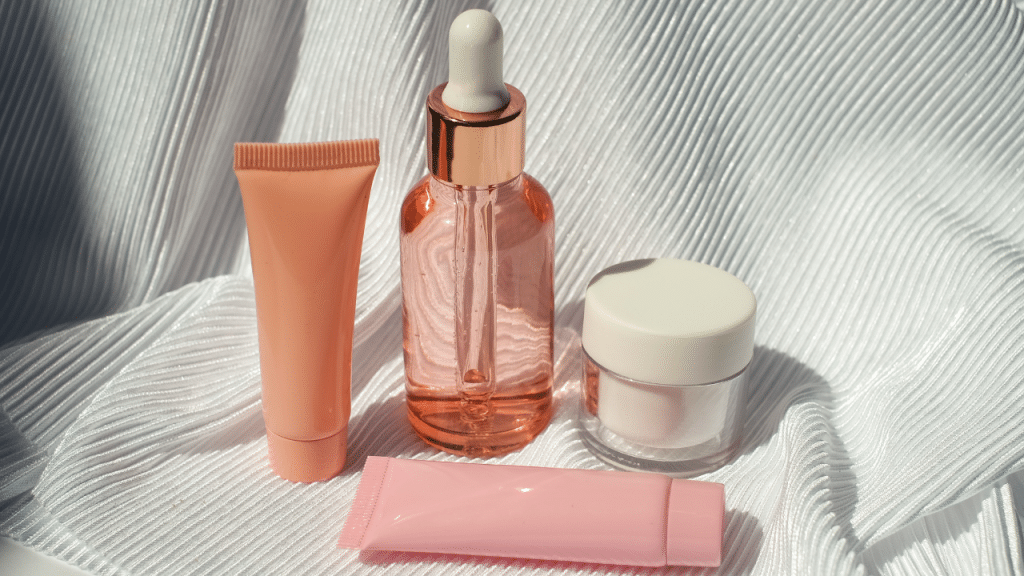
Morning Routine
Step 1: Gentle Cleansing
- Cream or milk cleanser with ceramides
- Lukewarm water only
- Pat dry with soft towel
- Avoid over-cleansing
Step 2: Treatment Serums
- Vitamin C serum for antioxidant protection
- Niacinamide if dealing with acne or oiliness
- Hyaluronic acid for hydration
- Allow absorption between layers
Step 3: Moisturize
- Pregnancy-safe moisturizer with ceramides
- Lightweight for oily skin, richer for dry
- Don’t skip even if skin feels oily
- Neck and décolletage too
Step 4: Sun Protection
- Mineral sunscreen with zinc oxide
- SPF 30 or higher
- Reapply every 2 hours
- Year-round protection
Evening Routine
Step 1: Double Cleanse (if wearing makeup)
- Cleansing oil or micellar water first
- Gentle cream cleanser second
- Thorough but gentle removal
- Pat dry completely
Step 2: Treatment (2-3 times per week)
- Azelaic acid for gentle exfoliation
- Low-concentration glycolic acid (under 10%)
- Alternate with hydrating serums
- Start slowly and build tolerance
Step 3: Hydrating Serums
- Hyaluronic acid for deep hydration
- Peptide serums for anti-aging support
- Niacinamide for oil control
- Layer thinnest to thickest
Step 4: Night Moisturizer
- Richer formulation than morning
- Ceramides and peptides
- Facial oils if needed for extra hydration
- Eye cream with safe ingredients
Weekly Treatments
Gentle exfoliation:
- Enzyme masks with fruit enzymes
- Low-concentration acid treatments
- Physical exfoliation with soft washcloth
- 1-2 times per week maximum
Hydrating masks:
- Sheet masks with hyaluronic acid
- Overnight masks for extra moisture
- DIY oatmeal and honey masks
- 2-3 times per week as needed
Trimester-by-Trimester Skincare Guide

First Trimester (Weeks 1-12)
Priority concerns:
- Most critical for avoiding harmful ingredients
- Morning sickness may affect routine tolerance
- Increased sensitivity to fragrances and textures
- Establish safe baseline routine
Key adjustments:
- Immediately stop all retinoids and high-dose acids
- Switch to mineral sunscreen
- Simplify routine if experiencing nausea
- Focus on gentle cleansing and hydration
Safe routine basics:
- Gentle cleanser morning and night
- Vitamin C serum in morning
- Hyaluronic acid for hydration
- Mineral sunscreen daily
- Simple moisturizer evening
Second Trimester (Weeks 13-27)
Common developments:
- “Pregnancy glow” from increased blood flow
- Melasma may start appearing
- Skin may become oilier or drier than usual
- Energy levels often higher for consistent routine
Skincare focus:
- Prevention of pigmentation with consistent sunscreen
- Address acne with safe ingredients if needed
- Maintain hydration as skin changes
- Add targeted treatments for specific concerns
Routine additions:
- Niacinamide for oil control if needed
- Azelaic acid for gentle exfoliation
- Vitamin C for melasma prevention
- Rich moisturizers for increasing dryness
Third Trimester (Weeks 28-40)
Physical considerations:
- Difficulty reaching feet for skincare
- Increased fatigue affecting routine consistency
- Skin stretching and potential stretch marks
- Preparation for breastfeeding considerations
Skincare priorities:
- Stretch mark prevention with rich moisturizers
- Gentle, effective routine you can maintain
- Consider breastfeeding safety for post-birth
- Stock up on safe products for after delivery
Simplified approach:
- Streamline to essential steps only
- Focus on hydration and sun protection
- Prepare nursing-safe routine
- Ask partner for help with hard-to-reach areas
Frequently Asked Questions
Q: Are all retinoids dangerous during pregnancy?
A: Yes, all forms of vitamin A (retinol, retinyl palmitate, tretinoin, adapalene) should be avoided during pregnancy due to proven teratogenic effects that can cause birth defects.
Q: Can I get facials during pregnancy?
A: Yes, but avoid chemical peels, microdermabrasion, and treatments with unsafe ingredients. Choose gentle, hydrating facials and always inform your esthetician about your pregnancy.
Q: Can I use the same products while breastfeeding?
A: Most pregnancy-safe skincare is also safe for breastfeeding, but some ingredients like higher-dose acids may need continued avoidance. Consult your healthcare provider.
Q: How do I treat pregnancy acne safely?
A: Use gentle cleansers, low-dose salicylic acid (under 2%), niacinamide, and azelaic acid. Avoid benzoyl peroxide in high concentrations and all retinoids.
Q: Is mineral sunscreen really necessary over chemical?
A: Yes, mineral sunscreens (zinc oxide, titanium dioxide) are preferred during pregnancy as they don’t absorb into the bloodstream like chemical sunscreens can.
Q: Can essential oils be used safely during pregnancy?
A: Most should be avoided due to high concentration and potential hormone-disrupting effects. If using any, heavily dilute and avoid known dangerous oils like sage and jasmine.
Q: What’s the safest way to treat melasma during pregnancy?
A: Consistent mineral sunscreen use, vitamin C serums, gentle exfoliation with safe acids, and patience. Avoid hydroquinone and high-dose treatments until after pregnancy.
Ready to dive deeper? Explore hormonehealthqueen.com for more info!
Follow us on social media!