

Pregnancy transforms your body in remarkable ways — and your skin is often the first to show it.
From that famous “pregnancy glow” to surprise breakouts and new pigmentation, changes in your skin are a direct result of the hormonal rollercoaster happening inside your body. Estrogen, progesterone, and other hormones surge to support your baby — but they can also trigger oil production, inflammation, and changes in melanin.
The good news? Most pregnancy-related skin conditions are temporary and manageable — especially when you understand what’s going on and how to care for your skin safely.
In this guide, we’ll walk you through trimester-by-trimester skin changes, common skin conditions (with images), and proven strategies to keep your skin healthy, calm, and glowing.
Trimester-by-Trimester Guide to Pregnancy Skin Changes
🤰 First Trimester (Weeks 1–12)
- Hormonal Shifts Begin: Progesterone and estrogen levels rise
- Skin Signs:
- Slight “glow” from increased blood flow
- First acne flare-ups or oiliness
- Sensitivity to products
🤰 Second Trimester (Weeks 13–26)
- Glow Mode On: Blood volume increases, boosting radiance
- Skin Signs:
- “Pregnancy glow” at its peak
- Start of melasma (dark facial patches)
- Possible redness or spider veins
🤰 Third Trimester (Weeks 27–40+)
- Stretching & Sensitivity: Skin under more pressure
- Skin Signs:
- Stretch marks become visible
- Itchiness and dryness intensify
- Melasma may darken
- PUPPP rash (in some women)
- Linea nigra (dark vertical belly line) appears
The 5 Most Common Pregnancy Skin Conditions
- Melasma (“Mask of Pregnancy”)
- Blotchy brown patches on cheeks, nose, or forehead
- Triggered by sun + hormonal changes
- Pregnancy Acne
- Caused by increased oil (sebum) production
- Can appear as whiteheads, blackheads, or cystic pimples
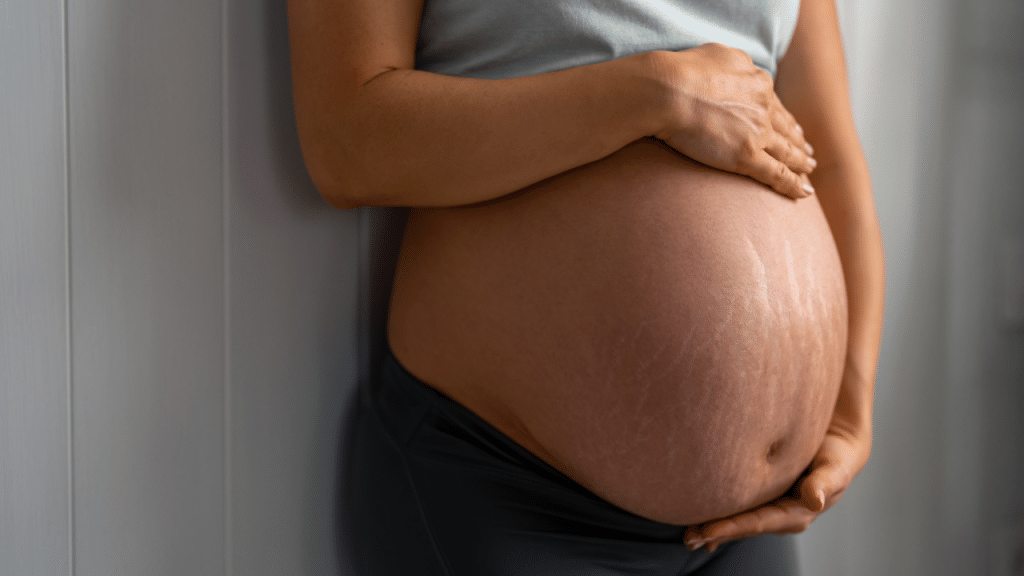
- Stretch Marks (Striae Gravidarum)
- Pink, red, or purple streaks on stomach, hips, or breasts
- Appear due to rapid skin stretching
- PUPPP Rash (Pruritic Urticarial Papules and Plaques of Pregnancy)
- Itchy, red rash usually on the belly
- Harmless but uncomfortable
- Linea Nigra
- Dark line from navel to pubic bone
- Harmless and fades postpartum
Pregnancy-Safe Skincare: Ingredients to Use vs. Avoid
✅ Safe Ingredients
- Hyaluronic acid: Hydrating, non-irritating
- Niacinamide: Calms inflammation, evens skin tone
- Vitamin C: Brightens skin safely
- Zinc oxide SPF: Physical sunscreen, safe and effective
- Azelaic acid: Fights acne and melasma gently
❌ Avoid These
- Retinoids (Retinol, Tretinoin): Risk of birth defects
- Salicylic acid (in high concentrations): Not recommended orally or over large areas
- Hydroquinone: Skin-lightening agent that may absorb systemically
- Chemical sunscreens with oxybenzone: Linked to hormone disruption
- Essential oils in high doses: Can be irritating and potentially risky
📌 Always consult your OB-GYN or dermatologist before trying a new product during pregnancy.
👩⚕️ 3 Dermatologist-Recommended Products Specifically Formulated for Pregnant Women
These products are OB-GYN and dermatologist-approved, designed to support your skin through the hormonal ups and downs of pregnancy — without compromising safety.
1. Belli Anti-Blemish Facial Wash
- Why it’s recommended: Contains lactic acid (a pregnancy-safe exfoliant) to gently clear pores and reduce acne without harsh ingredients.
- Best for: Hormonal breakouts and oily T-zones.
- Bonus: Fragrance-free and allergy-tested.
2. Hatch Mama Belly Oil

- Why it’s recommended: Lightweight and fast-absorbing, this botanical-rich oil (with calendula and sweet almond oil) helps prevent stretch marks and soothes itchy skin.
- Best for: Hydrating a growing belly and hips.
- Bonus: No parabens, phthalates, or synthetic fragrance.
3. Earth Mama Organics Mineral Sunscreen SPF 40
- Why it’s recommended: Uses non-nano zinc oxide, making it safe for both pregnancy and breastfeeding.
- Best for: Daily UV protection for sensitive, melasma-prone skin.
- Bonus: Reef-safe, baby-safe, and water-resistant.
📌 Always check with your doctor or dermatologist before starting new skincare products during pregnancy.
How to Manage the Most Concerning Skin Changes
Acne:
- Use pregnancy-safe spot treatments (azelaic acid, benzoyl peroxide under 5%)
- Wash face twice daily with gentle cleanser
- Avoid picking to reduce scarring
Stretch Marks:
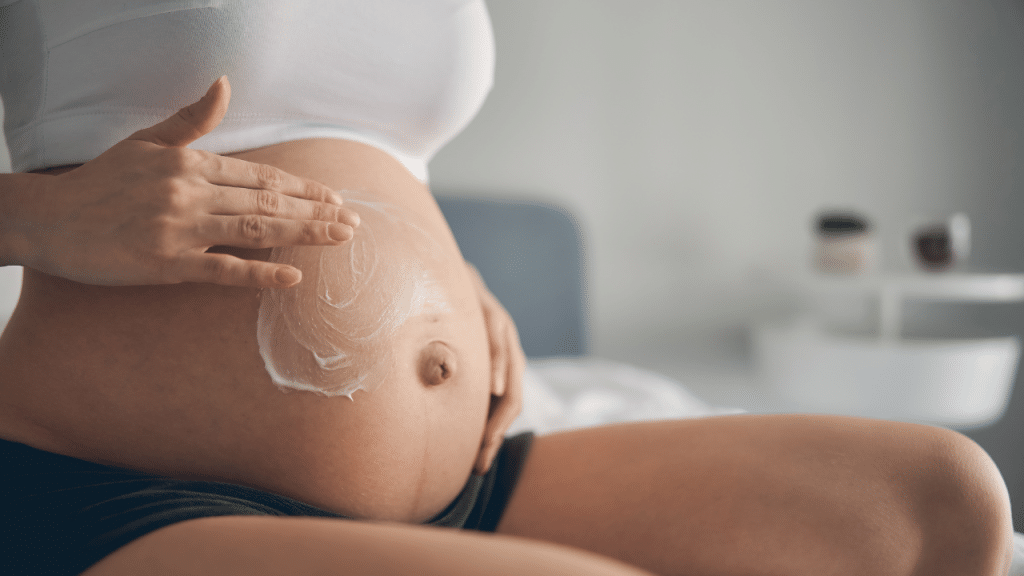
- Moisturize daily with shea butter, cocoa butter, or centella asiatica creams
- Stay hydrated
- Begin prevention early (start moisturizing as the belly starts to expand)
Melasma:
- Apply SPF 30+ daily with zinc oxide
- Wear a wide-brimmed hat outdoors
- Use niacinamide or azelaic acid serums
Stretch Mark Prevention & Minimization Guide
- Hydration is key: Drink plenty of water
- Massage belly and hips daily with creams rich in vitamin E and oils
- Use preventative creams early and consistently (look for centella, peptides, or hyaluronic acid)
- Don’t forget genetics: Some women are simply more prone
Managing Skin Sensitivity and Allergic Reactions
Pregnancy skin is often more reactive due to immune shifts.
Tips:
- Use fragrance-free, hypoallergenic products
- Always patch test new products
- Stick to minimal routines (cleanser, moisturizer, SPF)
- Switch to gentle, pH-balanced cleansers
The Emotional Impact of Pregnancy Skin Changes
Hormonal skin changes can affect your self-esteem — and that’s completely valid.
You might feel frustrated by acne or stretch marks, especially when everyone talks about the “glow.” Know this:
- Your body is doing something incredible
- Skin changes are temporary
- Therapy, journaling, and support groups can help you manage the emotional ups and downs
You are more than your skin. Your strength is beautiful.
Preparing for Postpartum Skin While Still Pregnant
- Expect melasma and acne to continue briefly postpartum
- Stock up on gentle, multitasking products — your time will be limited
- Continue using SPF even indoors
- Watch for postpartum hair loss and dryness around 3–4 months after delivery
Skin Type & Tone Considerations During Pregnancy
- Darker skin tones may be more prone to hyperpigmentation (melasma, dark spots)
- Oily skin may worsen acne in early pregnancy
- Dry skin types may become flaky and itchy in third trimester
- Tailor your routine to your unique skin + stage
When to Call Your Doctor
- Rash with fever or blisters
- Severe itching (especially hands/feet — possible cholestasis)
- Rapid-onset acne with pain or swelling
- PUPPP rash that spreads fast
- Any new mole, lesion, or bleeding skin spot
When in doubt, call your OB-GYN or a dermatologist specializing in pregnancy.
Top FAQs About Pregnancy Skin Changes
Q: When does the “pregnancy glow” start?
A: Typically in the second trimester due to increased circulation and oil production.
Q: Can I use retinol while pregnant?
A: No. Retinoids should be avoided due to potential risks to the baby.
Q: Will stretch marks go away after birth?
A: They usually fade over time but rarely disappear completely. Early treatment helps.
Q: Is pregnancy acne normal?
A: Yes — it’s very common due to hormonal shifts. Use pregnancy-safe acne treatments.
Q: Do all women get linea nigra?
A: Not everyone gets it, but it’s common and usually fades after pregnancy.
Explore more science-backed skin and hormone insights at HormoneHealthQueen.com